


China Welcomes Putin’s India Visit: A Big Step Toward Stronger Trilateral Ties with Russia
Man, if you thought international relations were getting predictable, think again. Just days after Russian President Vladimir Putin’s whirlwind trip to India wrapped up on December 6, 2025, China has jumped in with open arms, calling it a “positive signal” for deeper cooperation among the big three: India, Russia, and itself. It’s like watching old allies dust off their playbooks for a new chapter in Global South teamwork. As someone who’s followed these geopolitical chess moves for years, this feels like a genuine pivot—less about rivalry and more about teaming up against a shifting world order. With trade deals inked and eyes on everything from energy to tech, Putin’s visit isn’t just a handshake; it’s a blueprint for trilateral ties that could reshape Asia’s power play.
Putin’s India Trip: Deals, Dialogues, and a Nod to Deeper Bonds
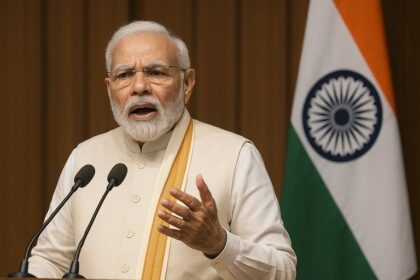
Putin touched down in New Delhi on December 4 for a three-day powwow that packed more punch than your average summit. Amid the usual red-carpet fanfare, he and Prime Minister Narendra Modi rolled out a slew of agreements aimed at cranking up trade and economic ties between the two nations. We’re talking everything from boosting bilateral trade—already humming at $65 billion last year—to joint ventures in defense tech and nuclear energy. Both sides even hashed out a roadmap for the next five years, focusing on supply chain stability and Arctic routes that could shave weeks off shipping times.
It wasn’t all business, though. The chats touched on Ukraine, with India sticking to its neutral lane while gently nudging for peace talks. And let’s not forget the cultural side—Putin got a taste of India’s soft power with a state dinner and talks on yoga exchanges. By the time he left, the vibe was clear: India and Russia are doubling down on their “special and privileged” partnership, even as Western sanctions bite harder on Moscow.
China’s Take: ‘Welcome News’ and a Call for Trilateral Teamwork
Fast-forward to December 8, and Beijing’s foreign ministry drops a statement that’s all smiles about the visit. Spokesperson Mao Ning called it a “positive development” that strengthens India-Russia relations, which she framed as key to “regional and global peace, stability, and the interests of all three countries.” China, Russia, and India? Yeah, they’re positioning themselves as the heavy hitters of the Global South—a bloc that’s tired of being sidelined in G7 chats and ready to carve out its own lane.
Mao didn’t stop at warm fuzzies. She straight-up urged “stronger trilateral cooperation” among the trio, hinting at summits, joint projects, and maybe even a formalized RIC (Russia-India-China) framework that’s been on the back burner since 2019. It’s smart timing: With BRICS expanding and the world eyeing multipolarity, China sees this as a way to counterbalance U.S. influence without poking the bear (or the dragon) too hard. Analysts are buzzing that this could mean more energy swaps—Russia’s oil to India and China—or tech collaborations that sidestep Western export controls.
Why Trilateral Ties Are Heating Up in Late 2025: The Bigger Picture
Let’s be real—geopolitics doesn’t move in a vacuum. Putin’s India hop comes right after his BRICS summit push and amid escalating U.S.-China trade spats. For India, it’s a balancing act: Deepen Moscow ties for cheap energy (Russia supplies 40% of its oil now) without ruffling feathers in Washington. China, meanwhile, wants to keep Russia close as a buffer against NATO’s eastward gaze, while mending fences with New Delhi after those Himalayan border skirmishes.
The trilateral angle? It’s gold for the Global South. Imagine coordinated votes at the UN, shared infrastructure like the International North-South Transport Corridor, or even a joint fund for green tech in developing nations. Sure, trust issues linger—China’s Belt and Road debt traps still sting in Delhi—but the math adds up: Combined GDP over $20 trillion, a third of the world’s population, and enough clout to flip global agendas.
Quick Look at Key Outcomes from Putin’s Visit
| Agreement Area | Details | Potential Impact |
|---|---|---|
| Trade Boost | Target $100B bilateral trade by 2030 | Stabilizes supply chains amid global disruptions |
| Defense Tech | Joint production of BrahMos missiles | Enhances India’s self-reliance, Russia’s export edge |
| Energy Deals | Long-term LNG supplies from Russia | Cuts India’s import costs by 15-20% |
| Connectivity | Arctic Sea Route access for Indian ships | Faster trade routes to Europe, saving $1B yearly |
Reactions Pouring In: From Diplomats to Desk Jockeys
Social media’s lit up since China’s nod—X (you know, Twitter) is full of takes ranging from “Game on for Asia’s new power trio” to skeptics warning of “too much overlap with BRICS drama.” Indian outlets like The Economic Times are optimistic, seeing it as a win for Modi’s multi-alignment strategy. Over in Beijing, state media’s framing it as a “win-win for emerging markets,” with subtle digs at Western “hegemony.”
Experts like former ambassador Ashok Kantha point out the irony: The same countries that clashed at the 2020 Ladakh standoff are now eyeing joint ventures. It’s messy, sure, but that’s diplomacy—finding common ground in the cracks.
What’s Next for India-Russia-China Ties? My Two Cents
If history’s any guide, this warmth could cool if border tensions flare or U.S. tariffs bite harder. But with Putin eyeing a multipolar world and Xi pushing “win-win” vibes, 2026 might see a RIC foreign ministers’ meet—maybe in Goa or Vladivostok. For India, it’s a tightrope: Leverage Russia for tech and energy, charm China for trade ($135B last year), without tipping into anyone’s orbit.
Bottom line? This visit’s a reminder that in 2025, alliances aren’t zero-sum. It’s about building bridges that last, and China welcoming Putin in India feels like the first plank.
Quick Answers: Your Burning Questions on This Diplomatic Dance
Got questions on the Putin visit and China’s cheer? Here’s the straight dope.
- Why did China welcome Putin’s India trip so warmly? They see it as a boost for Global South unity—India, Russia, and China teaming up for peace and prosperity without Western strings.
- What deals came out of Putin’s visit? Big ones on trade (aiming $100B), defense (more BrahMos missiles), energy (LNG flows), and shipping routes—stuff that hits the wallet hard.
- Is trilateral cooperation for real, or just talk? It’s gaining steam—think joint UN pushes and infrastructure plays—but borders and trust need work first.
- How does this fit with BRICS? Perfectly—RIC could supercharge BRICS by focusing on the core three, adding muscle to global south agendas.
- Could this annoy the U.S.? You bet—deeper India-Russia ties already raise eyebrows in D.C., and China’s in the mix? That’s a red flag for Indo-Pacific watchers.