

UAE-Backed Separatists Seize Southern Yemen: A Game-Changer in the Endless Civil War
Holy cow, if Yemen’s civil war wasn’t complicated enough, the last week has thrown a massive curveball. On December 8, 2025, the UAE-supported Southern Transitional Council (STC) dropped a bombshell, claiming they’ve locked down pretty much the entire south of the country—including the key port of Aden and oil-rich spots in Hadramaut. It’s like watching a chess master sweep the board while everyone’s still figuring out the rules. As someone who’s tracked this mess for years, it feels like the separatists just hit the accelerator, leaving the fragile unity government scrambling. With the Houthis still pounding away in the north and Saudi Arabia caught off-guard, this power grab could rewrite Yemen’s future—or drag everyone deeper into chaos.
The Big Seizure: How STC Pulled Off Control of Southern Yemen Overnight
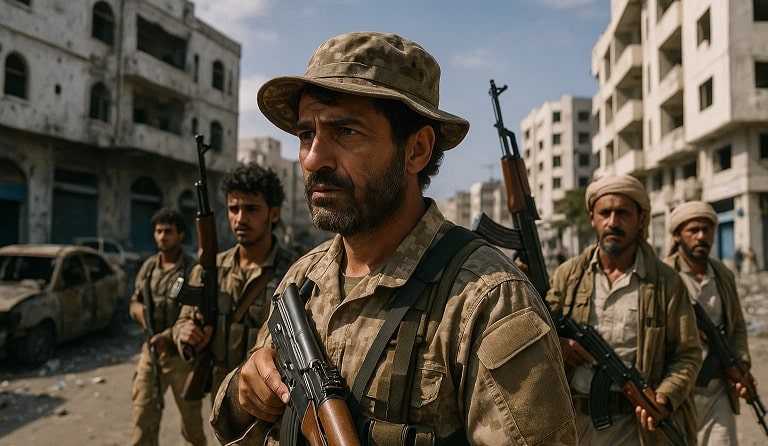
Let’s break it down without the jargon. The STC, those southern separatists who’ve been UAE’s go-to guys since 2017, didn’t waste time. They rolled into Seiyun in Hadramaut province last week, snagging not just the town but the massive oil fields around it—think billions in potential revenue. By Monday, they were announcing “broad control” over the south, from Aden’s bustling port (Yemen’s economic lifeline) to swaths of Abyan and Shabwa. No major bloodshed reported yet, but tensions spiked enough to shut down Yemen’s airspace for a hot minute.
From what I’ve pieced together from on-the-ground reports, it was a mix of smart moves and lucky breaks. STC forces, beefed up with UAE drones and training, moved fast while the government’s attention was split fending off Houthi missile barrages. An STC official told Reuters it was all about “securing our homeland,” but let’s call it what it is: a bold land grab in a vacuum of weak central authority. The unity government in Sana’a? They’re fuming, calling it a “coup,” but with their hands full up north, they’re not in a position to push back hard.
A Quick History Lesson: Why Southern Yemen’s Been a Powder Keg for Years
To get why this blew up now, you gotta rewind. Yemen’s south was its own country until 1990, when a rocky unification turned into civil war by ’94. Fast-forward to 2015: The big Saudi-led coalition jumps in against the Houthis, but UAE has its own agenda—backing the STC to carve out a pro-Abu Dhabi buffer zone. By 2019, STC even kicked the government out of Aden in a mini-coup, forcing a shaky power-sharing deal in 2022.
UAE’s fingerprints are everywhere: They’ve poured in cash for ports, roads, and militias, turning the south into their playground while Saudi focuses on the north. It’s classic divide-and-rule—UAE gets oil access and a Red Sea foothold, STC gets autonomy dreams, and Yemen? Stuck in the middle. This week’s moves? Just the latest escalation in a tug-of-war that’s cost 377,000 lives and displaced millions.
What’s Happening Right Now: December 2025’s Tense Standoff
As of December 9, things are on a knife’s edge. STC’s celebrating with roadblocks and flag-waving in Aden, but the government’s slapped sanctions on their leaders and begged the UN for help. Airspace reopened after a day, but flights are spotty—expect delays if you’re routing through there. Houthi media’s gloating, firing off rockets to remind everyone they’re still in the game, while Saudi’s quietly fuming (they see UAE as undercutting their coalition lead).
On X, it’s a wildfire: #SouthernYemen trending with 50K posts, from separatist cheers (“Finally free!”) to doomsayers (“Civil war 2.0 incoming”). Al Jazeera’s got footage of STC convoys rolling into oil sites, and AP notes UAE’s “tightening grip” without denying involvement. Bottom line: No full-blown clash yet, but one wrong move, and southern Yemen could erupt.
The Ripple Effects: How This Shakes Up Yemen, the Gulf, and Beyond
This isn’t just a local dust-up—it’s got global stakes. For starters, Aden’s port handles 70% of Yemen’s imports; if STC digs in, food and fuel prices could spike, worsening the humanitarian nightmare (13 million already on the brink). Oil? Hadramaut’s fields pump 100K barrels a day—UAE control means cheaper crude for Abu Dhabi, but headaches for Saudi’s Aramco.
Regionally, it’s a UAE-Saudi rift waiting to happen. Riyadh’s coalition is cracking, with whispers of renewed fighting between STC and Islah Islamists. For the U.S. and West, it’s messy: They back the government but turn a blind eye to UAE’s role for anti-Houthi muscle. And the Houthis? This chaos lets them consolidate north, maybe even eyeing a Bab al-Mandeb chokehold on shipping lanes (20% of world oil flows through).
Long-term, if STC holds, southern independence talks heat up—think a partitioned Yemen that redraws Gulf maps. But if it backfires, expect more refugees (already 4.5 million displaced) and proxy escalations that suck in Iran and Qatar.
Snapshot of Key Players in Southern Yemen’s Power Shift
| Group/Player | Role | What’s at Stake |
|---|---|---|
| STC (UAE-backed) | Separatist militia | Autonomy dreams, oil cash, port control |
| Unity Government | Fragile Sana’a coalition | Losing south means no real power |
| Saudi Arabia | Coalition lead | Influence erosion, Houthi gains |
| UAE | Silent financier | Economic foothold, anti-Iran buffer |
| Houthis | Northern rebels | Distraction lets them arm up |
Honestly, I’m cautiously pessimistic. A UN-brokered ceasefire might buy time, but without real talks on southern self-rule, this powder keg reignites. UAE’s got the leverage to push for status quo ante, but why would they? Watch for a January 2026 RIC (Russia-India-China) nod or Gulf summit to mediate—China’s already welcoming Putin’s India ties as a “positive” for multipolarity, so Yemen could fit their Global South pitch.
For everyday Yemenis, it’s heartbreaking: More checkpoints, higher prices, less hope. But if this forces a federal fix, maybe it’s the jolt needed after a decade of deadlock.
Your Questions Answered: Straight Talk on the Yemen Shake-Up
Curious about the details? Here’s the no-fluff rundown.
- What’s the deal with STC seizing southern Yemen? UAE-backed separatists rolled in fast, grabbing Aden port and Hadramaut oil fields—claiming “broad control” to push for southern independence.
- Why now, in December 2025? Government’s distracted by Houthis up north; STC saw the opening and pounced while Saudi’s influence wanes.
- Is UAE officially involved? Not on record, but everyone’s pointing fingers—their drones and dollars are an open secret.
- How does this affect global oil and shipping? Aden’s port chaos could hike Red Sea fees; Hadramaut oil tilts supply toward UAE, maybe dropping prices a buck or two.
- Will this spark all-out war again? Fingers crossed for no, but yeah—tensions are sky-high. UN’s calling for calm.
- China’s angle? They’re cheering India-Russia ties as a “win” for stability—could pull Yemen into trilateral talks for de-escalation.