

Aramco 1 Billion Barrels of Lost Oil Will Slow Market Recovery
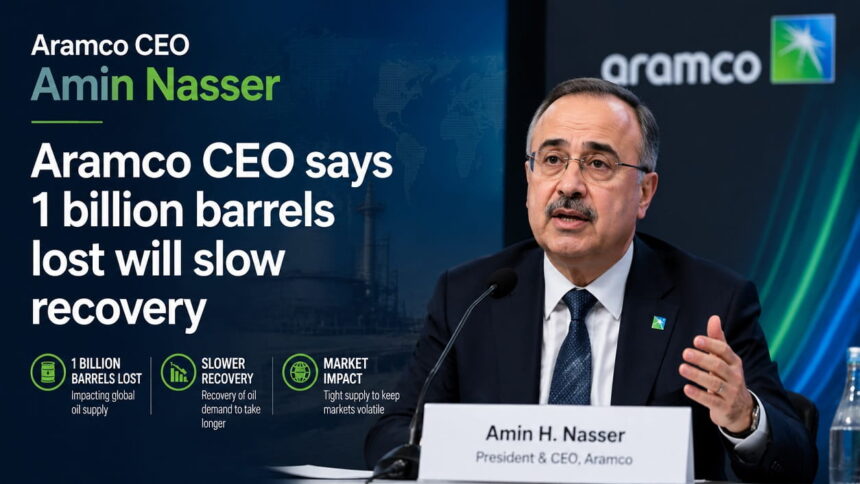
Saudi Aramco CEO Amin Nasser delivered a sobering message on May 10, 2026: the world has lost roughly 1 billion barrels of oil over the past two months due to severe shipping disruptions in the Strait of Hormuz, and getting the market back to normal won’t happen overnight.
Speaking at an industry event, Nasser emphasized that simply reopening shipping routes won’t magically fix the damage. “Reopening routes is not the same as normalizing a market that has been deprived of about one billion barrels of oil,” he said. Years of underinvestment in new supply have left global inventories dangerously low, making the situation even more fragile.
This is one of the clearest warnings yet from the world’s biggest oil producer about the long-term scars left by the ongoing Iran-related conflict.
What Caused the Massive Supply Shock
The disruptions stem from heightened tensions and attacks that effectively choked one of the world’s most critical energy chokepoints. The Strait of Hormuz normally carries about 20% of global oil supply. When shipping traffic slowed dramatically, the impact was immediate and severe.
Aramco itself relied heavily on its East-West Pipeline to bypass the strait and keep some flows moving to the Red Sea port of Yanbu. Nasser noted that the company managed to restore certain facilities in 24–48 hours thanks to prior planning — something that would have taken months otherwise.
Still, the broader market felt the pain. Oil prices surged above $100 per barrel at times, and the cumulative loss of 1 billion barrels has created a deep hole that won’t be filled quickly.
Why Recovery Will Take Time
Nasser highlighted two major reasons the market will heal slowly:
- Massive Volume Lost — One billion barrels is an enormous amount. Even with maximum production from OPEC+ and others, rebuilding stocks takes months.
- Chronic Underinvestment — The industry has been cautious about new projects for years due to energy transition pressures. This has left spare capacity thin and inventories low heading into the crisis.
As a result, energy markets could remain tight and volatile for the rest of 2026, even if shipping normalizes in the coming weeks.
Impact on Global Economy and Consumers
Higher and more volatile oil prices are already rippling through the economy:
- Increased fuel and transportation costs
- Higher inflation pressure on goods and services
- Strain on energy-importing countries in Asia and Europe
- Potential delays in rate cuts by central banks
Aramco, however, has benefited in the short term. The company reported strong Q1 2026 profits thanks to elevated prices, but Nasser stressed that long-term stability matters more than temporary windfalls.
Aramco’s Resilience Strategy
Despite the challenges, Aramco has shown operational strength. By maximizing alternative routes and leveraging existing infrastructure, it mitigated some of the worst effects. Nasser reassured that Asia remains a key market and that the company continues to prioritize reliable supply to its customers.
What Happens Next
The big question now is how quickly shipping through the Strait of Hormuz can return to normal levels. Diplomats are working behind the scenes, but until safe passage is fully restored, the market will stay on edge.
For oil traders and investors, this means continued volatility. For everyday consumers, it could translate into higher prices at the pump and in grocery stores for months to come.
Quick Answers to Your Questions
How much oil has actually been lost? About 1 billion barrels over the past two months, according to Aramco’s CEO.
Will oil prices stay high? They are likely to remain elevated and volatile until inventories are rebuilt, which could take several months.
Is this only a short-term problem? No. Nasser warned that underinvestment has made the system slower to recover even after flows resume.
How is Aramco handling it? By using alternative pipelines and maximizing production where possible while keeping long-term customers supplied.
What should drivers and consumers expect? Higher fuel prices are likely to persist through much of 2026 until the supply situation stabilizes.