

Global Aluminium Output at Risk Amid Petroleum Coke Shortage, JPMorgan Says
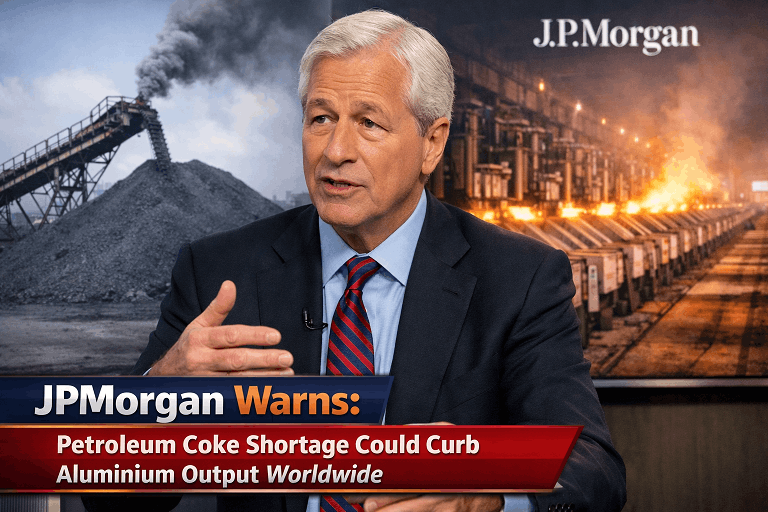
JPMorgan Warns Petroleum Coke Shortage Could Curb Aluminium Output Worldwide
A serious warning just dropped from Wall Street that could hit the global aluminium industry hard. JPMorgan analysts have flagged a tightening supply of petroleum coke (petcoke) — a critical material used to make carbon anodes for aluminium smelting — as a major risk that could reduce global aluminium production in the coming months.
This isn’t just a minor supply glitch. Analysts at JPMorgan estimate the shortage could cut worldwide aluminium output by 3-5% this year if the crunch worsens, potentially pushing prices higher and creating headaches for industries from cars and construction to packaging and renewable energy.
Why Petroleum Coke Is Suddenly a Big Problem
Petroleum coke is a byproduct of oil refining. It’s baked into anodes that are essential for the electrolytic process used to produce primary aluminium. Without enough high-quality petcoke, smelters can’t run at full capacity.
Several factors are colliding right now:
- Reduced oil refining runs in some regions due to lower margins
- Lower output of anode-grade petcoke from refineries shifting to cleaner fuels
- Strong demand from aluminium smelters in China, India, and the Middle East
- Logistics and shipping disruptions still lingering from earlier geopolitical tensions
JPMorgan’s commodities team noted that petcoke prices have already jumped sharply in key markets, with some grades rising more than 25% since the start of 2026. They warn that if the shortage persists into the second half of the year, it could force smelters to cut production or switch to more expensive alternatives.
Who Gets Hit the Hardest?
China remains the world’s largest aluminium producer, accounting for nearly 60% of global output. Any meaningful shortage there would ripple across the planet. Other big players like India, Russia, Canada, and the Middle East Gulf countries could also face pressure.
For downstream industries, this could mean:
- Higher aluminium prices (already up 8-10% this year)
- Potential delays in supply for electric vehicles, solar panels, and building materials
- Margin pressure on manufacturers who can’t easily pass on higher costs
Current Market Snapshot
| Item | Situation | Impact |
|---|---|---|
| Petcoke Prices | Up 25%+ in 2026 | Raising smelting costs |
| Aluminium Prices | Up 8-10% YTD | Adding pressure on end-users |
| Expected Output Impact | 3-5% global reduction possible | Tightens supply further |
| Major Affected Regions | China, India, Middle East | Risk of production cuts |
JPMorgan isn’t predicting a total meltdown, but they are advising clients to prepare for a tighter market. Some aluminium producers are already looking at alternative anode materials or securing long-term petcoke contracts at premium prices. Others may slow expansion plans until the supply picture improves.
On the positive side, higher prices could eventually encourage more refining investment and bring new petcoke supply online — but that usually takes 12–24 months.
What This Means for Investors and Businesses
If you’re invested in aluminium companies, mining stocks, or downstream manufacturers (autos, packaging, renewables), this is worth watching closely. Short-term, it supports aluminium prices. Longer-term, it adds another layer of cost inflation in the green energy transition.
For everyday consumers, the effects may show up gradually — slightly more expensive cars, cans, or solar installations if the shortage drags on.
Bottom Line
JPMorgan’s warning is a reminder that even as the world pushes for cleaner energy, old-school industrial inputs like petroleum coke can still create major bottlenecks. The aluminium industry, critical for electric vehicles and renewable infrastructure, now faces another supply-side challenge on top of energy costs and trade tensions.
Markets hate uncertainty — and right now, the petcoke shortage is delivering plenty of it.
Quick Answers
How bad is the petcoke shortage? Significant and worsening. Prices are already up sharply, and JPMorgan sees risk of 3-5% lower global aluminium output.
Why is petcoke so important? It’s the main material for making carbon anodes used in aluminium smelting. No good substitute exists at scale right now.
Will aluminium prices keep rising? Likely yes in the short to medium term, unless supply disruptions ease quickly.
Which companies are most exposed? Large smelters in China and India, plus downstream users like auto and packaging manufacturers.
Any positive side? Higher prices may encourage new investment in petcoke production over time.