

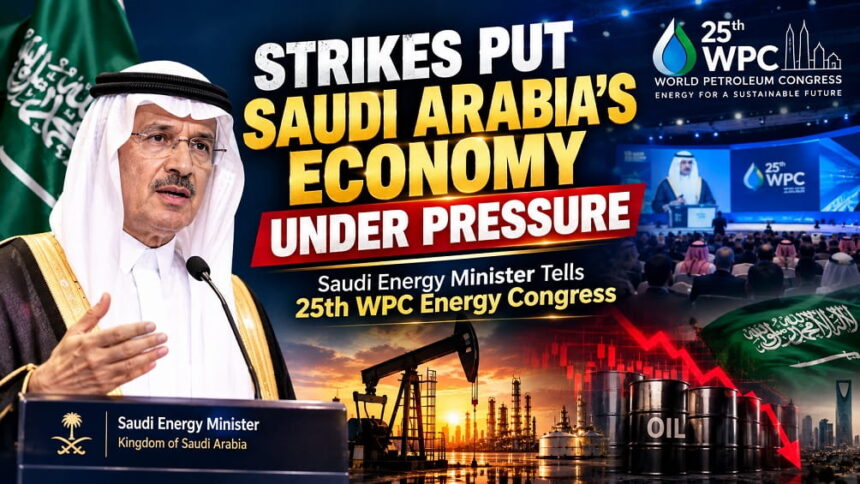
Strikes Put Saudi Arabia’s Economy Under Pressure
Recent strikes targeting key infrastructure in Saudi Arabia are intensifying economic pressures on the kingdom, disrupting oil exports, aviation, investor confidence, and progress toward its ambitious Vision 2030 diversification goals. Attacks linked to Houthi forces and broader regional conflict have hit pipelines, airports, and other assets, compounding challenges already created by disruptions to shipping through the Strait of Hormuz.
These developments raise questions about near-term growth, fiscal balances, and the kingdom’s ability to attract the foreign investment needed to reduce reliance on oil revenues.
Nature and Scope of the Strikes
Houthi attacks have targeted critical Saudi infrastructure, including the East-West oil pipeline and major airports such as King Khalid International Airport in Riyadh and facilities in Dammam. Pipeline disruptions have threatened Red Sea oil export routes that became more important after Hormuz shipping was heavily constrained. Airport strikes have caused flight disruptions, casualties, and heightened security concerns.
These incidents form part of a wider regional conflict that has already affected Gulf energy logistics and trade flows throughout much of 2026.
Impact on Oil Sector and Exports
Oil remains central to Saudi Arabia’s economy despite diversification efforts. Pipeline shutdowns and export constraints have reduced crude volumes reaching markets. Earlier in the year, the oil sector contracted sharply, contributing to overall GDP declines. Alternative routes and floating storage have provided only partial offsets.
Lower export volumes, even when partially mitigated by higher prices at times, have strained government revenues and complicated fiscal planning.
Broader Economic Contraction and Growth Outlook
Saudi Arabia recorded a significant quarterly GDP contraction earlier in 2026, driven largely by the plunge in oil-related activity. Non-oil sectors showed more resilience but have also faced headwinds from reduced confidence, event cancellations, and disruptions to business and tourism activity.
Forecasts for full-year growth have been revised downward by various analysts, with expectations of contraction or much weaker expansion than previously anticipated. Recovery projections for subsequent years depend heavily on the restoration of secure export routes and a de-escalation of regional tensions.
Pressure on Vision 2030 and Investment Ambitions
Vision 2030 aims to transform the Saudi economy through tourism, technology, entertainment, manufacturing, and large-scale projects, while targeting substantially higher foreign direct investment. Strikes on high-profile infrastructure undermine the image of stability that is essential for attracting international capital and visitors.
High-profile events have been cancelled or postponed, and concerns about security have weighed on business sentiment. Achieving ambitious FDI targets becomes more difficult when infrastructure is repeatedly targeted and travel is disrupted.
Fiscal and Market Implications
Saudi Arabia was already managing budget deficits and a current account shortfall before the intensification of attacks. Increased defense and security spending, combined with pressure on oil revenues, has led to deeper projected fiscal shortfalls. Stock market indices have reacted negatively to major incidents, reflecting investor unease.
Foreign reserves provide a buffer, and the kingdom retains access to capital markets, but prolonged disruption would test these cushions and potentially slow non-oil project implementation.
Effects on Tourism, Events, and Business Confidence
The tourism and entertainment sectors, key pillars of diversification, are particularly sensitive to security perceptions. Airport attacks and travel disruptions reduce inbound tourism and attendance at conferences and cultural events. Businesses report heightened pressure, and some international participants have scaled back engagement.
Key Economic Pressures at a Glance
| Area | Impact Description |
|---|---|
| Oil Exports & Pipelines | Disruptions to East-West pipeline and alternative routes |
| Airports & Aviation | Strikes on major airports, flight disruptions |
| GDP Growth | Contractions driven by oil sector declines |
| Investor Confidence | Reduced FDI appeal and event cancellations |
| Fiscal Position | Wider deficits amid higher security spending |
| Vision 2030 Progress | Challenges to tourism, tech, and non-oil goals |
Historical and Regional Context
Saudi Arabia has faced intermittent attacks from Houthi forces in previous years, often focused on energy infrastructure. A period of relative calm was interrupted as regional conflict escalated in 2026. The kingdom has sought to balance involvement in regional security with protection of its economic transformation agenda.
The current wave of strikes occurs against the backdrop of broader Middle East tensions that have already constrained shipping, raised insurance costs, and complicated energy trade.
Future Outlook and Potential Scenarios
The trajectory of Saudi Arabia’s economy will depend on the duration and intensity of attacks, the effectiveness of defensive measures, and the broader path of regional de-escalation. Restoration of pipeline operations and secure export channels would support a rebound in oil activity. Sustained security improvements would help rebuild confidence among investors and visitors.
In the meantime, authorities are likely to prioritize critical infrastructure protection and adjust spending priorities. Non-oil growth initiatives may proceed more selectively, with greater emphasis on projects less vulnerable to external shocks.
Frequently Asked Questions
What strikes are putting pressure on Saudi Arabia’s economy?
Attacks on oil pipelines, major airports, and related infrastructure, primarily attributed to Houthi forces amid wider regional conflict.
How has the oil sector been affected?
Export routes have been disrupted, contributing to sharp contractions in oil-related GDP and lower overall growth.
What is the impact on Vision 2030?
Security concerns and infrastructure damage undermine efforts to attract foreign investment and develop tourism and other non-oil sectors.
Has Saudi GDP contracted?
Yes, the economy recorded significant quarterly declines earlier in 2026, largely due to oil sector weakness.
How are markets and investors reacting?
Stock indices have fallen on major incidents, and analysts note risks to foreign direct investment and business confidence.
What buffers does Saudi Arabia have?
Substantial foreign reserves and access to capital markets provide some resilience, though prolonged disruption would increase fiscal strain.
Navigating Economic Pressure Amid Regional Conflict
Strikes on critical infrastructure have placed Saudi Arabia’s economy under clear pressure, amplifying the effects of earlier shipping disruptions and complicating the kingdom’s long-term diversification strategy. While oil remains a major vulnerability, the attacks also threaten the confidence and stability required for Vision 2030 progress in tourism, investment, and non-oil growth. The coming months will test the effectiveness of security responses and the resilience of Saudi Arabia’s economic buffers as the kingdom seeks to protect both its energy revenues and its broader transformation agenda.