


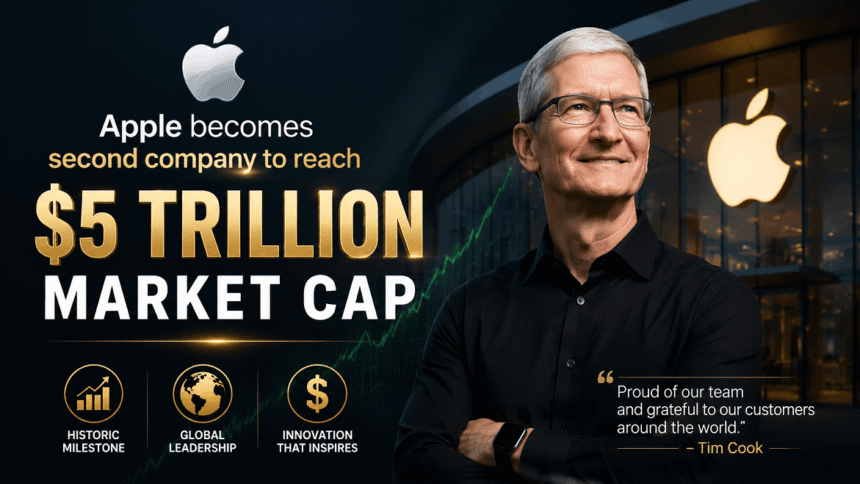
Apple Becomes Second Company to Reach $5 Trillion Market Cap: A Historic Milestone in Tech Valuation
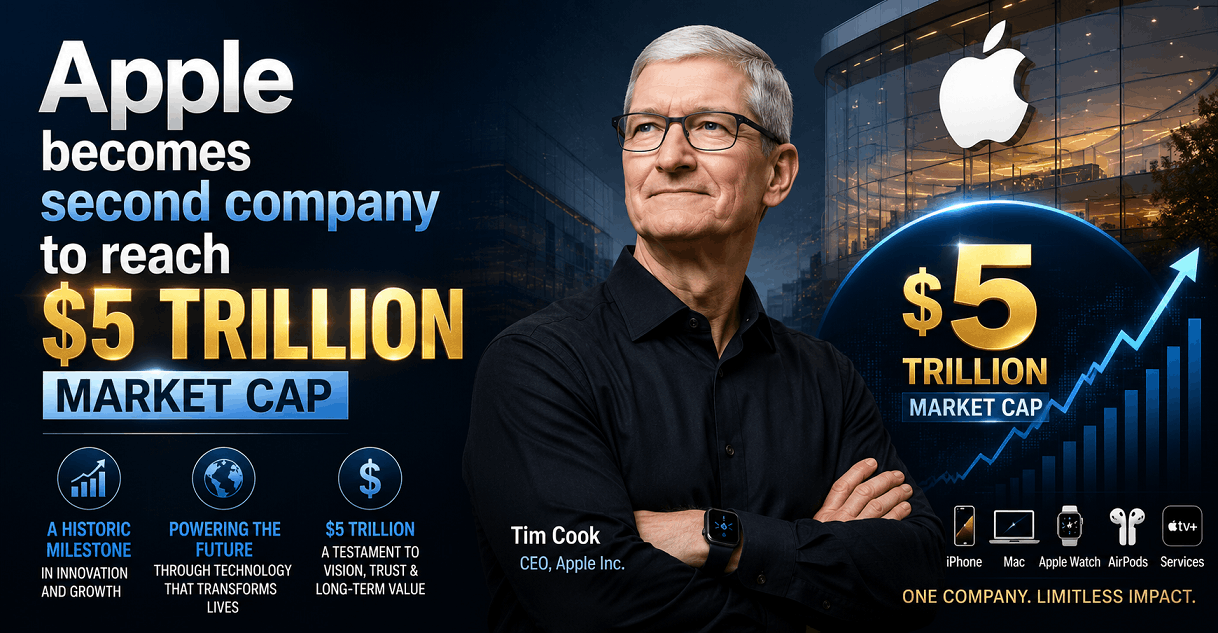
Apple has become only the second publicly traded company in history to reach a $5 trillion market capitalization, briefly crossing the landmark threshold during trading on July 28, 2026. The achievement places the iPhone maker in an exclusive club alongside Nvidia and reaffirms its position as one of the most valuable companies in the world.
This milestone arrives amid strong investor confidence in Apple’s product ecosystem, resilient demand for its devices, and its relatively measured approach to artificial intelligence spending compared with peers.
How Apple Crossed the $5 Trillion Threshold
Apple’s shares climbed as much as 1.8 percent during the session, pushing the stock price high enough for market capitalization to exceed $5 trillion for the first time. The gain was driven by continued strength in iPhone sales, expanding services revenue, and broader market preference for companies with strong cash generation and brand loyalty.
Nvidia had previously become the first company to hit $5 trillion in late 2025, fueled by surging demand for AI chips. Apple’s arrival at the same level highlights the diversity of paths leading to extreme valuations in the technology sector.
Apple’s Journey Through Market Cap Milestones
Apple has a long history of pioneering valuation records. It was the first company to reach a $1 trillion market capitalization in August 2018. Subsequent milestones followed as the company expanded its ecosystem of hardware, software, and services.
Key valuation achievements include:
| Milestone | Approximate Date | Significance |
|---|---|---|
| $1 Trillion | August 2018 | First public company to reach this level |
| $2 Trillion | August 2020 | Rapid growth during pandemic demand |
| $3 Trillion | January 2022 | Peak of post-pandemic valuation surge |
| $4 Trillion | October 2025 | Recovery and product strength |
| $5 Trillion | July 28, 2026 | Second company ever to achieve this mark |
Latest Market Context and Competition with Nvidia
In the days leading up to the milestone, Apple reclaimed the title of the world’s most valuable company from Nvidia. The two firms have traded places multiple times as investor sentiment shifted between AI infrastructure spending and more diversified consumer technology businesses.
Apple’s relatively lower capital expenditure on large-scale AI data centers has appealed to investors seeking stability amid volatility in the semiconductor sector. Strong performance in services, wearables, and Mac products has also supported the stock’s upward trajectory in 2026.
Historical Significance of the $5 Trillion Club
Only two companies have ever reached this valuation: Nvidia and Apple. The $5 trillion mark represents an unprecedented concentration of market value in a handful of technology firms. It reflects both extraordinary innovation and the power of network effects, brand strength, and recurring revenue models in the modern economy.
For Apple specifically, the achievement validates decades of focus on vertical integration, premium pricing, and ecosystem lock-in that has delivered consistent profitability and cash flow.
Impacts on Investors, Competitors, and the Broader Market
The milestone boosts confidence among Apple’s large institutional and retail investor base. It also intensifies competitive dynamics within Big Tech, as rivals assess their own paths to sustained valuation growth.
For the broader market, Apple’s size means its stock movements carry significant weight in major indices such as the S&P 500 and Nasdaq. Index funds and ETFs holding Apple experience corresponding performance effects. The concentration of wealth in a few mega-cap technology stocks continues to shape portfolio construction and risk discussions among professional investors.
Future Scope and Growth Drivers
Looking ahead, Apple’s ability to maintain or expand its valuation will depend on several factors. Upcoming product cycles, including potential foldable devices and further enhancements to AI features across the ecosystem, are closely watched. Services revenue growth, international expansion, and potential new categories remain important long-term drivers.
Challenges include regulatory scrutiny in multiple markets, supply chain pressures, and the need to continually innovate while defending high margins. Successful navigation of these issues could support further valuation expansion, while setbacks might lead to periods of consolidation.
Apple’s Position Among Mega-Cap Technology Companies
The $5 trillion threshold places Apple in rare company. While Nvidia reached the level first through AI hardware dominance, Apple has arrived through a broader combination of hardware leadership, software platforms, and high-margin services. This difference in business models offers investors distinct exposure within the technology sector.
Frequently Asked Questions
Which companies have reached a $5 trillion market cap? Only Nvidia and Apple have achieved this milestone so far.
When did Apple first hit $5 trillion? Apple briefly crossed the $5 trillion market capitalization during trading on July 28, 2026.
Is Apple currently the most valuable company in the world? Yes, around the time of the milestone, Apple reclaimed the top position from Nvidia based on market capitalization.
What factors drove Apple’s stock higher in 2026? Strong iPhone demand, resilient services growth, and investor preference for its cash-generative business model amid AI-related volatility in other tech stocks.
How is market capitalization calculated? It is the share price multiplied by the total number of outstanding shares.
What does this mean for Apple’s future? It provides greater flexibility for investment, share buybacks, and strategic initiatives, while also increasing expectations for continued performance.
A New Chapter in Corporate Valuation History
Apple’s entry into the $5 trillion market capitalization club marks another landmark in the company’s remarkable journey from a personal computer innovator to a global technology leader. As the second firm to reach this level, Apple demonstrates the enduring power of brand, ecosystem, and disciplined execution in creating extraordinary shareholder value. The milestone is both a celebration of past achievements and a platform for the next phase of growth in an increasingly competitive and technology-driven world.