

Bain Capital Sells Entire Kioxia Stake After 4,000% Surge: A Landmark Private Equity Exit
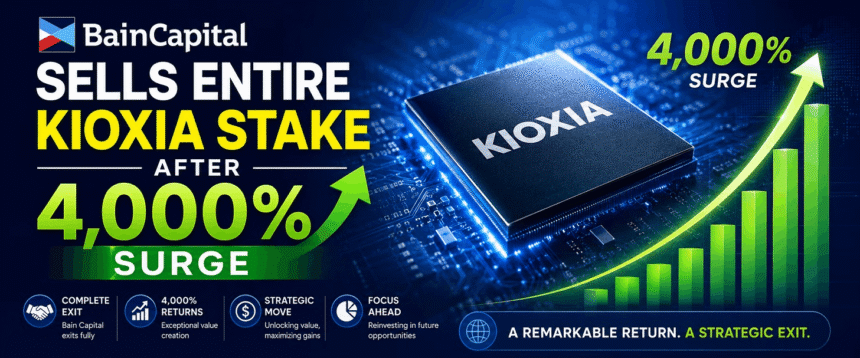
Bain Capital has fully exited its investment in Kioxia Holdings, the Japanese memory semiconductor giant, following an extraordinary value surge of approximately 4,000% or more. The move marks one of the most profitable private equity deals in recent history, fueled by the global AI boom and rising demand for NAND flash memory chips.
This complete sale closes a transformative chapter for both Bain Capital and Kioxia, highlighting the massive returns possible in the semiconductor sector amid technological revolutions.
What Led to Bain Capital’s Massive Gains in Kioxia?
Bain Capital originally led a consortium to acquire Toshiba’s memory business in 2018, rebranding it as Kioxia. The investment, initially valued around $18 billion for the carve-out, benefited tremendously from AI-driven data center expansion and memory chip shortages.
Kioxia’s stock price skyrocketed after its public listing, delivering returns estimated at nearly 20 times the original investment. Bain gradually reduced its stake over time before completing the full exit, realizing billions in profits.
Details of the Full Stake Sale
Bain Capital’s managing partner confirmed the complete divestment, noting zero remaining ownership. Earlier partial sales had already generated substantial cash, with the final exit capitalizing on peak valuations.
The transaction underscores strong investor appetite for high-performance memory technologies critical to AI training and inference workloads. Proceeds from the sale provide Bain with significant dry powder for new opportunities in technology and beyond.
Impact on Kioxia and the Semiconductor Industry
The exit removes a major shareholder, potentially increasing free float and market liquidity for Kioxia shares. For the company, it signals confidence in its independent future while benefiting from continued AI tailwinds.
Broader industry implications include validation of memory chip investments as AI infrastructure scales globally. Competitors may face heightened expectations, while suppliers and partners in the ecosystem could see sustained demand.
Historical Background of the Bain-Kioxia Deal
The 2018 acquisition was a complex carve-out from Toshiba, involving multiple international investors and regulatory approvals. Bain’s deep expertise in Japan and technology investments proved decisive.
Post-acquisition, Kioxia navigated industry cycles, including memory market downturns, before the AI surge transformed its prospects. The journey from leveraged buyout to public company with explosive growth exemplifies successful private equity value creation through operational improvements and strategic positioning.
Economic and Market Implications of the Exit
Bain’s windfall highlights the outsized rewards in semiconductors during periods of technological disruption. It may encourage more private capital toward chip manufacturing and innovation.
For Japan’s tech sector, the success strengthens its position in global supply chains for critical components. Investors worldwide are now scrutinizing similar opportunities in AI-enabling technologies.
Future Outlook for Kioxia After Bain Exit
Kioxia is well-positioned to continue innovating in NAND flash and related memory solutions. With strong fundamentals driven by AI, data centers, and consumer electronics, the company can pursue growth independently.
Potential strategies include capacity expansions, partnerships, and advancements in next-generation memory architectures. The post-exit environment may bring new shareholder dynamics and focus on sustainable profitability.
Bain Capital’s Investment Performance Snapshot
| Aspect | Details |
|---|---|
| Original Acquisition | ~$18 billion carve-out (2018) |
| Peak Surge | ~4,000%+ value increase |
| Estimated Returns | Nearly 20x on investment |
| Final Action | Complete stake sale (2026) |
| Key Driver | Global AI infrastructure demand |
Broader Private Equity Trends Reflected in the Deal
The Kioxia exit aligns with private equity firms harvesting gains from technology bets made years earlier. As AI reshapes industries, similar high-multiple exits may become more common in semiconductors, software, and data infrastructure.
Bain Capital itself gains enhanced reputation and resources for future deals, potentially targeting other high-growth tech segments.
Frequently Asked Questions (FAQs) about Bain Capital Kioxia Exit
How much did Bain Capital profit from Kioxia?
The investment delivered extraordinary returns, estimated around 20 times the initial commitment, thanks to the massive stock surge.
What caused Kioxia’s 4,000% value increase?
Explosive demand for memory chips driven by artificial intelligence, data centers, and digital transformation.
Does Bain Capital still own any part of Kioxia?
No, the firm has sold its entire remaining stake.
What does this mean for Kioxia’s future?
Greater independence, potential liquidity improvements, and continued focus on memory technology leadership.
How does this deal compare to other private equity exits?
It ranks among the most lucrative in recent years, showcasing the rewards of long-term technology investments.
Will this affect global chip prices or supply?
Indirectly, it reflects strong market conditions that support ongoing investments in production capacity.
Lessons from Bain Capital’s Successful Kioxia Journey
This landmark transaction demonstrates the power of patient capital, strategic industry insight, and timing in high-tech investments. As AI continues reshaping the world, opportunities in enabling technologies like advanced memory remain compelling.
Bain Capital’s full exit after such dramatic gains sets a benchmark for value creation in private equity while underscoring Kioxia’s pivotal role in the semiconductor ecosystem.