

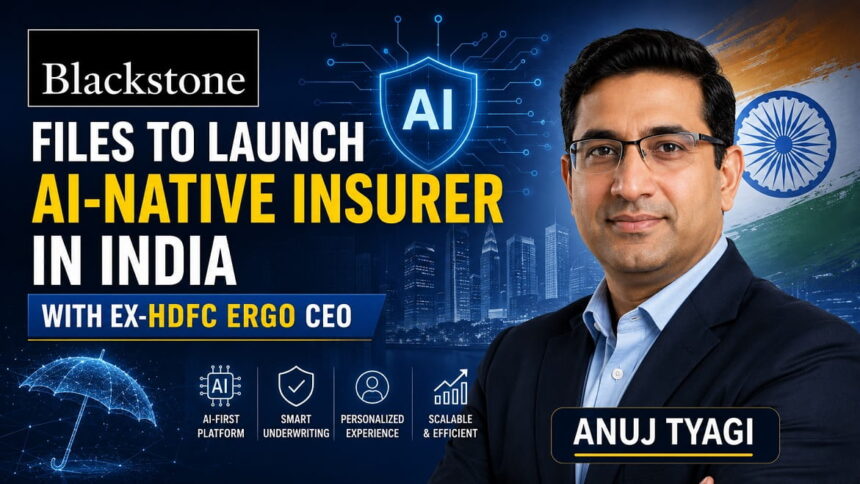
Blackstone Files to Launch AI-Native Insurer in India with Ex-HDFC Ergo CEO: A Game-Changer for Insurtech
Blackstone, one of the world’s leading investment firms, has filed plans to launch a new AI-native insurance company in India in partnership with the former CEO of HDFC Ergo. This ambitious move aims to disrupt the traditional insurance sector by leveraging artificial intelligence for underwriting, claims processing, customer service, and risk assessment, potentially transforming how policies are issued and managed in one of the fastest-growing insurance markets globally.
The initiative underscores growing investor confidence in India’s digital economy and the huge potential of combining global capital with local expertise in fintech and insurtech.
Details of Blackstone’s AI-Native Insurance Venture
The proposed insurer will be built from the ground up as an AI-first entity, utilizing machine learning algorithms to personalize offerings, detect fraud more effectively, and streamline operations. By reducing reliance on manual processes, the company expects to offer competitive pricing and faster service to customers across health, motor, property, and life insurance segments.
The involvement of the ex-HDFC Ergo CEO brings deep industry knowledge, regulatory experience, and established networks within the Indian insurance landscape, strengthening execution capabilities.
Why India? Strategic Importance of the Market
India’s insurance sector is undergoing rapid penetration, driven by rising incomes, digital adoption, and government initiatives like Ayushman Bharat. With a large underinsured population, the market offers substantial headroom for growth. Blackstone’s entry signals belief in long-term demographic dividends and the country’s push toward financial inclusion through technology.
AI-native models are particularly suited here, where data volumes from smartphones and government databases can fuel sophisticated predictive analytics.
Role of Ex-HDFC Ergo Leadership in the New Venture
The former HDFC Ergo CEO’s expertise in scaling operations, navigating IRDAI regulations, and building customer-centric products will be instrumental. Their track record in one of India’s largest private insurers provides credibility and a blueprint for efficient growth while addressing local nuances in claims handling and distribution.
This partnership blends Blackstone’s global investment prowess with proven domestic leadership.
Impact on Indian Insurance Industry and Competition
Traditional players may face pressure to accelerate their own digital transformations. The new entrant could capture market share through innovative products like usage-based insurance, real-time risk monitoring, and seamless omnichannel experiences.
For consumers, benefits may include lower premiums, quicker claim settlements, and tailored coverage options. However, challenges around data privacy, regulatory compliance, and building trust in AI-driven decisions will need careful management.
Broader Trends in AI and Insurtech Globally and in India
The global insurtech boom has seen heavy investments in AI for automation and personalization. In India, several startups have already made strides, but a well-funded player backed by Blackstone could set new benchmarks. This aligns with worldwide shifts where insurers use predictive models to move from reactive to proactive risk management.
Future Scope and Growth Potential
The venture is poised for significant scaling, potentially expanding product lines and geographic reach within India. Long-term, opportunities include cross-border services, reinsurance, and integration with broader fintech ecosystems. Success could attract further foreign capital into Indian financial services and inspire similar AI-focused initiatives.
Blackstone’s Investment Strategy in India
Blackstone has been active in Indian infrastructure, real estate, and technology. This insurance foray diversifies its portfolio into financial services while capitalizing on the country’s digital public infrastructure like UPI and Aadhaar-enabled authentication.
Potential Challenges and Regulatory Considerations
Launching a new insurer requires IRDAI approval, robust capital requirements, and solvency norms. AI applications will face scrutiny on ethical use, bias mitigation, and customer protection. Building a reliable claims ecosystem and managing cyber risks will also be priorities.
AI-Native Insurance vs Traditional Models
| Aspect | Traditional Insurer | AI-Native Approach |
|---|---|---|
| Underwriting | Manual, rule-based | Real-time data-driven predictions |
| Claims Processing | Time-consuming | Automated with image recognition |
| Customer Experience | Standardized | Highly personalized |
| Operational Costs | Higher | Significantly lower |
| Fraud Detection | Reactive | Proactive machine learning |
Frequently Asked Questions (FAQs)
What is an AI-native insurer? A company designed around artificial intelligence from inception for core functions like pricing, risk evaluation, and service delivery.
Who is partnering with Blackstone for this launch? The former CEO of HDFC Ergo, bringing extensive Indian insurance expertise.
When will the new insurer start operations? Following regulatory approvals, with filings already submitted to authorities.
How will this affect existing insurance companies in India? Increased competition likely to drive innovation and efficiency across the sector.
What benefits can customers expect? Faster policies, better customization, potentially lower costs, and improved claim experiences.
Is this part of a larger Blackstone strategy in India? Yes, reflecting continued commitment to high-growth sectors in the Indian economy.
The Road Ahead for AI in Indian Insurance
Blackstone’s filing to launch an AI-native insurer with seasoned local leadership represents a major vote of confidence in India’s insurtech future. As the venture progresses, it could redefine standards for efficiency, accessibility, and innovation in the insurance space, ultimately benefiting millions of policyholders while contributing to the country’s digital economy goals.